
What Games Are Actually Inside the Truck? A Look at the 4 Most Common Types
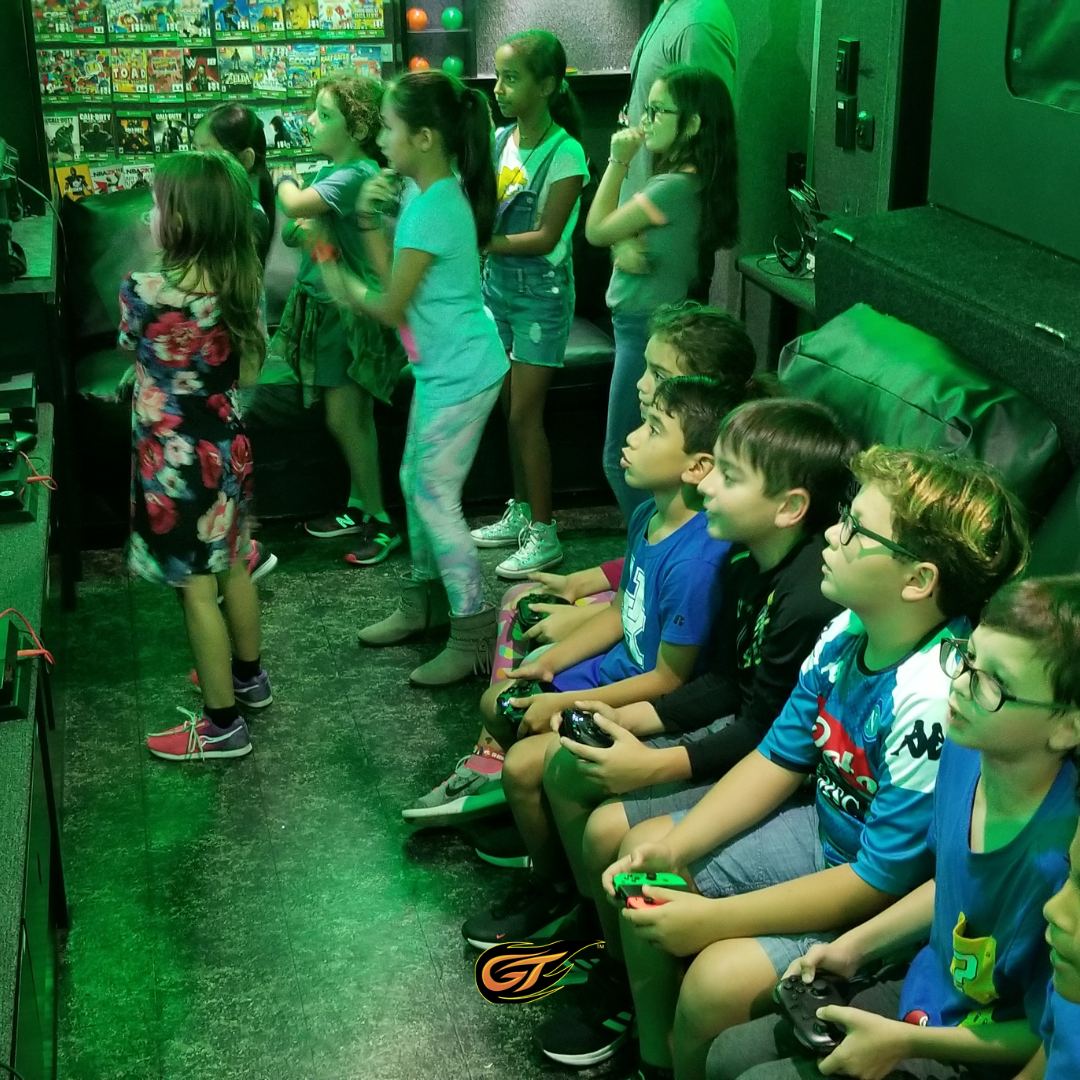
Once you know which game ratings are right for your party, the next big question is: what games will the kids actually be playing? While every GameTruck company has a slightly different library, most stock their trailers with a reliable mix of titles designed for group fun. It’s less about confusing genres and more about the kind of experience the game creates for a crowd. Thinking about it this way, nearly every game on a gaming trailer falls into one of four categories. Each one offers a different way for kids to play together.- Friendly Competition: These are the racing, sports, and fighting games where players compete in a lighthearted way. They are easy for beginners to pick up and play.
- Creative Collaboration: Focused on teamwork, these games involve building worlds or solving problems together. They are fantastic for encouraging communication.
- Hilarious Party Games: Designed specifically for groups, these games are a collection of wild, fast-paced mini-games that are all about causing laughter.
- Action & Adventure: These games often have more of a story, where players can team up to explore new worlds and overcome challenges.
What About Fortnite or Roblox? A Parent's Guide to Popular (and Worrisome) Games
It’s the game you’ve heard about constantly, and likely the one your child is begging to play: Fortnite. Seeing its “T” for Teen rating can be confusing, but the reason is simpler than you might think. Fortnite’s rating is for “cartoon violence”—players shoot colorful lasers at each other, and defeated characters simply vanish in a flash of light. There is no blood or gore, making it more like a high-tech game of laser tag than a realistic conflict. The key here is understanding that a “T” for Teen rating is worlds away from an “M” for Mature rating. An M-rated game, which reputable gametruck operators will not offer at a child’s party, often contains realistic violence and themes similar to an R-rated movie. By contrast, the action in Fortnite is designed to feel animated and competitive, not frightening or graphic. For many parents, this distinction makes it an acceptable choice for kids 10 and up. So where does a game like Roblox fit in? This is a common point of confusion. While Fortnite is a single game, Roblox is more like a massive online library containing millions of different games made by its users. Some are simple obstacle courses, while others can contain more mature themes. Because of this unpredictability, most gametrucks will stick to well-known, pre-approved games within Roblox or may avoid it altogether. Ultimately, you have control. You can greenlight a specific game like Fortnite for your party while requesting that the Game Coach steer the kids toward other options. The best gametruck experiences, however, often come from games that aren't about winning or losing at all, but about working together.Beyond Winning: How to Request Games That Actually Build Teamwork
When you think of video games, you probably picture kids competing against each other. This is known as competitive, or "Player vs. Player" (PvP), gameplay. In games like Mario Kart or Super Smash Bros., the goal is to beat everyone else. While this can be a blast, it's not the only way to play. The best multiplayer games for a kids party often take a completely different approach, one that you can specifically request. These are called cooperative games, where everyone is on the same team, working together to beat the game itself. Instead of a virtual battleground, the screen becomes a shared puzzle that requires communication and teamwork to solve. Hearing the kids cheer for a shared victory, rather than one person’s win, can completely change the social dynamic of a party. This style of play is fantastic for mixed-age groups or for kids who get frustrated by constant competition. A perfect example is a popular title like Overcooked! 2, one of the most requested kid-friendly Nintendo Switch party games. In this game, players team up as chefs in a chaotic kitchen to prepare meals before time runs out. One player might be chopping vegetables while another is washing dishes, and they have to talk constantly to succeed. By asking your gametruck operator for "cooperative video games for children," you can ensure the party is full of high-fives and teamwork, not just a contest for first place.The 5 Essential Questions to Ask Before You Book Any Mobile Video Game Theater
Knowing what types of games you want is the first step. The next is making sure the company you hire can deliver that specific experience. A professional gametruck operator expects parents to have questions about game selection and will have clear answers ready. Before you commit, use this checklist to screen any potential vendor and guarantee there are no surprises on party day. Their responses will tell you everything you need to know. Here are the five most important questions to ask:- Can I set a strict game rating limit for the party (e.g., 'E10+ and below only')? This is the most critical question. The answer should be an immediate "yes."
- Is there a dedicated Game Coach who stays with the kids and enforces our rules? You're not just renting a truck; you're hiring a managed experience. The Game Coach is your key to a stress-free event.
- Do you have a good selection of cooperative games like Overcooked? This shows them you want teamwork-oriented fun, not just competitive matches.
- Can I see your full game library and request specific titles in advance? A good company will be proud to show you their list and help you choose the best games for a video game party.
- What is your policy if a child asks to play a game that is not on our approved list? The correct answer involves the Game Coach politely redirecting the child to one of the pre-approved options.